
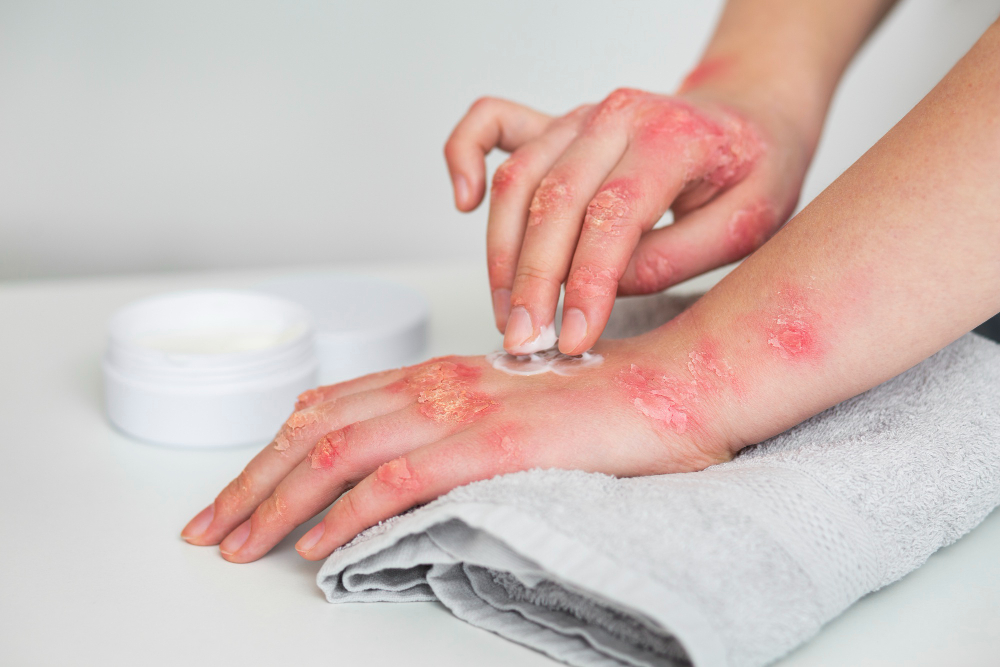
Psoriasis is a long-lasting skin problem that causes red, scaly patches. Skin sensitivity means your skin reacts easily to things like soaps, weather, or stress. Many people look for gentle ways to manage these issues. Ayurvedic care for psoriasis and skin sensitivity uses natural remedies, diet, and lifestyle changes. This approach aims to balance the body and improve skin health. In many places, such as India and the United States, Ayurvedic care is gaining attention for its holistic benefits.
What Is Psoriasis?
Psoriasis is a skin disease that leads to thick, red patches covered with silvery scales. These patches often appear on elbows, knees, scalp, or lower back. However, they can show up anywhere on the body. Symptoms may include itching, burning, or soreness. Sometimes, nails and joints are also affected. According to the World Health Organization (WHO), about 2–3% of people worldwide have psoriasis. It can start at any age, but it often appears between ages 15 and 35. While it is not contagious, it can affect daily life and self-esteem.
Understanding Skin Sensitivity
Skin sensitivity means your skin reacts quickly to things that most people can handle. For example, soaps, perfumes, or even changes in weather can cause redness, itching, or stinging. Many people with psoriasis also have sensitive skin. Because their skin barrier is weaker, it reacts more to triggers. Common triggers include:
As a result, managing both psoriasis and skin sensitivity often requires gentle care and special attention.
Causes of Psoriasis and Skin Sensitivity
From a modern view, psoriasis is linked to the immune system. The body attacks its own skin cells by mistake, causing rapid growth and buildup. Genes and environment both play a role. Skin sensitivity, on the other hand, may be caused by a weak skin barrier or allergies.
In Ayurveda, these problems are seen as imbalances in the body’s natural energies, called doshas. Psoriasis is often linked to an imbalance of Pitta and Kapha doshas. Pitta stands for heat and inflammation, while Kapha relates to moisture and buildup. When these doshas are out of balance, skin problems can appear. Ayurveda also considers diet, stress, and lifestyle as important causes.
Ayurvedic Diagnosis and Principles
Ayurvedic doctors assess skin conditions by looking at your whole health. They ask about your diet, daily habits, stress, and family history. In addition, they check your pulse, tongue, and skin. The main goal is to find which doshas are out of balance. For psoriasis and skin sensitivity, Pitta and Kapha are usually involved. Ayurveda believes that balancing these doshas can help restore healthy skin. This approach is used in Ayurvedic care in India, the UK, and many other regions.
Ayurvedic Treatment Approaches
Ayurvedic care for psoriasis and skin sensitivity uses natural and holistic methods. These treatments focus on calming inflammation, reducing triggers, and supporting skin health. Common Ayurvedic treatments include:
Because each person is unique, Ayurvedic doctors create a plan that fits your body type and needs.
Prevention and Daily Care Tips
Daily self-care is a key part of Ayurvedic psoriasis care and skin sensitivity management. Simple steps can help protect your skin and prevent flare-ups. For example, you can:
With regular Ayurvedic care, many people notice fewer symptoms and better skin comfort. However, consult Dr. Prajwal Reddy for skin related issues and treatment.